
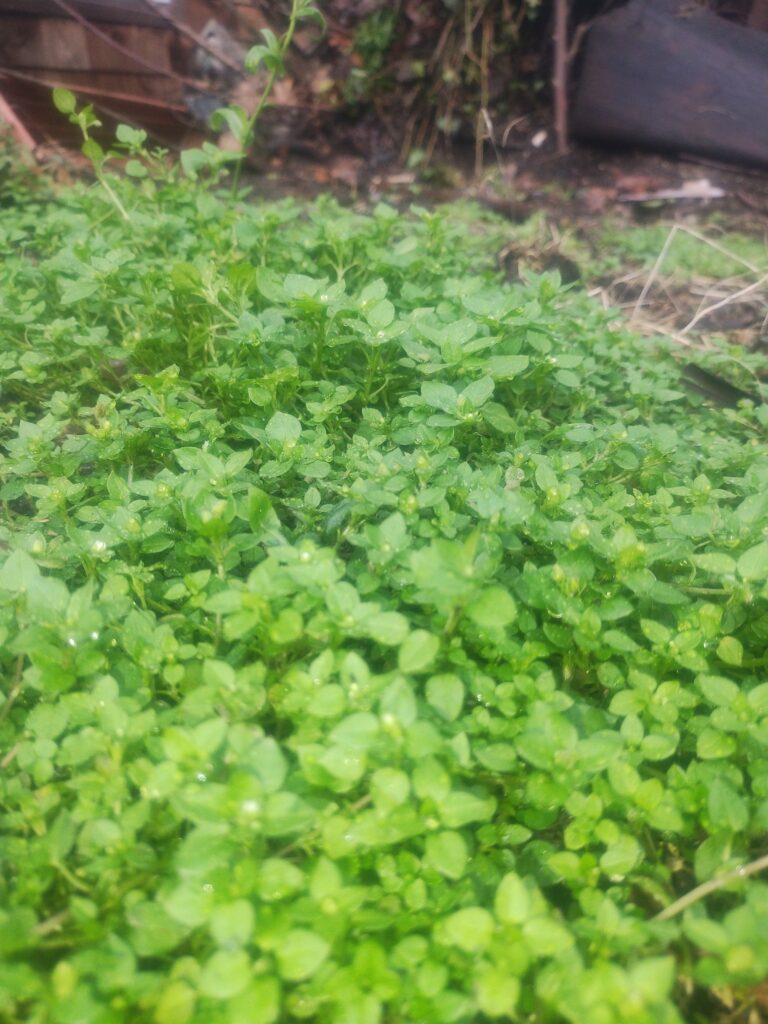
I absolutely love that it’s early January and I’m still harvesting fresh greens from the garden. Mind you, these are not greens that I’ve planted, but they sure are greens that I did not weed out!
Here’s a picture I took today of Chickweed (Stellaria media) growing out of rich soil I have spent many years building via composting free materials.
Chickweed is one of those plants most people pull without a second thought—and then promptly regret once they learn what it is. Common chickweed thrives in disturbed soil, garden beds, and lawns, often showing up early in the season when little else is growing. Instead of treating it as a nuisance, it’s worth recognizing chickweed as a reliable, edible, and genuinely useful “volunteer” plant.
How to Identify Chickweed
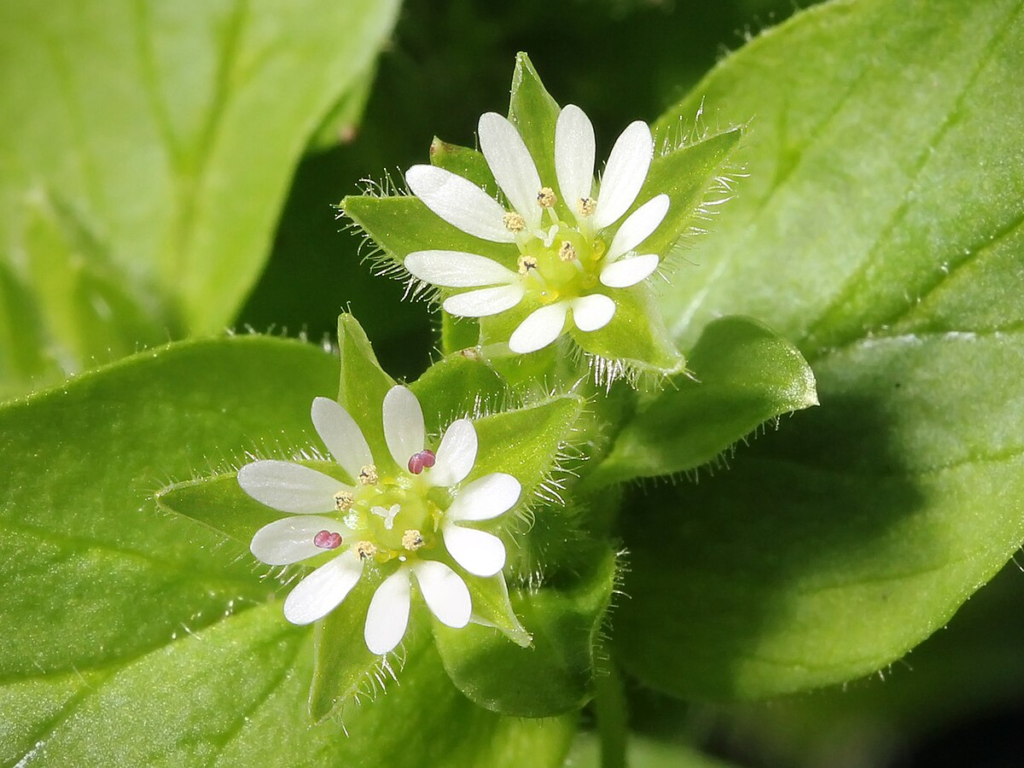
Chickweed (Stellaria media) is a low-growing, tender plant with small oval leaves arranged in opposite pairs along a thin, delicate stem. Another identifier is the single line of fine hairs running down one side of the stem, which switches sides at each leaf node. The flowers are tiny and white, appearing to have ten petals at first glance, though they are actually five deeply split petals. When crushed, the plant feels moist and succulent rather than fibrous or woody. Look at some wild food identification resources to get started.
Eating Chickweed
Chickweed is mild, fresh, and slightly grassy in flavor, making it easy to incorporate into everyday food. The leaves, stems, and flowers are all edible. It works particularly well raw in salads, sandwiches, or as a garnish, and can also be lightly wilted into soups (e.g. sprucing up your ramen), eggs, or pasta. Because it’s tender, chickweed doesn’t benefit from long cooking; quick use preserves both texture and taste.
As with any wild food, it’s important to always follow safe harvesting tips, including only harvesting only from areas free of pesticides, herbicides, and heavy contamination, and having a positive identification before eating.
Keeping the Desirable Weeds
Chickweed also illustrates a broader idea: not every weed needs to be eradicated. Some plants earn their place in your garden by offering food, ground cover, or ecological benefits at no cost. Learning to distinguish between weeds that compete aggressively and those that quietly provide value allows you to work with your environment rather than constantly fighting it.
Applied awareness, in this sense, means knowing what’s growing at your feet, and deciding deliberately what stays. Chickweed is a good place to start.