
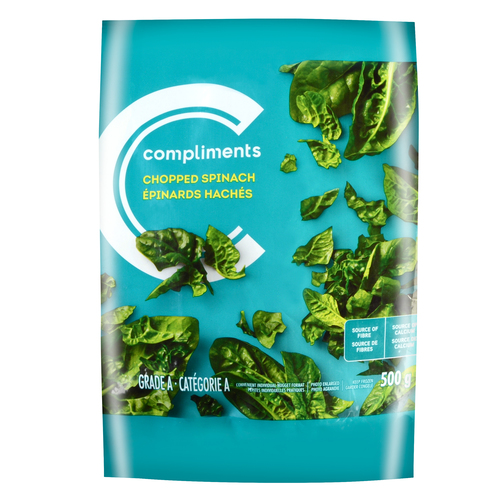
Frozen spinach rarely gets enthusiasm. And I get it…
It is not trendy, photogenic, or exciting. And yet, from a practical standpoint, it may be one of the highest-value foods you can keep on hand. It is inexpensive, long-lasting, nutrient-dense, and endlessly adaptable—exactly the kind of ingredient that quietly improves your options day after day.
Reliability Beats Freshness
Fresh spinach spoils quickly. Even with good intentions, it often ends up wilted and forgotten in the crisper drawer. Frozen spinach solves that problem entirely. It is harvested at peak freshness, blanched, and frozen immediately, locking in nutrients and eliminating the pressure to use it “before it goes bad.”
This reliability matters. Food that keeps is food you can actually depend on, especially when schedules tighten, energy runs low, or you can’t get out to the store.
Dense Nutrition, Small Footprint
Another thing it’s got going for it is that frozen spinach is extremely compact. A single frozen block represents a large volume of fresh leaves, compressed into a form that takes up minimal freezer space. That block delivers fiber, iron, folate, magnesium, and vitamins A and K in one simple addition.
Because it is already washed, trimmed, and cooked, the barrier to use is almost zero. Drop it into soups, sauces, eggs, rice, or noodles and it disappears into the dish while quietly upgrading the nutritional profile.
Frictionless Meal Upgrades
Frozen spinach excels at improving “base” foods. Ramen, pasta, lentils, beans, frozen meals, and leftovers all benefit from a handful added at the end of cooking. There is no chopping, no timing, and no cleanup. It simply dissolves into hot food.
This makes it especially valuable on low-effort days. When cooking motivation is minimal, frozen spinach still lets you add something green and meaningful without changing your workflow.
Cost Control and Waste Reduction
Spinach is one of the cheapest frozen vegetables available, particularly when bought in large bags or blocks. Because it essentially doesn’t spoil when frozen (that is to say, I’ve never thrown out old frozen spinach), it eliminates a common source of food waste. Every portion you buy is a portion you can eventually use.
From a cost-per-nutrient perspective, it consistently outperforms fresh greens that end up discarded.
A Quiet Form of Preparedness
Keeping frozen spinach on hand broadens your options. It extends your ability to make decent meals when fresh produce is unavailable, whether due to weather, supply disruptions, or simply a busy week.
This is not about hoarding or extreme preparedness. It is about maintaining flexibility and nutritional baseline with minimal effort.
A Few Last Words…
I should add here, I only buy frozen spinach in ball form. I’m aware that buying spinach by the block could save me a few cents per transaction (maybe $0.05 per 100 grams), but realistically? I don’t want to be chopping up a frozen block of spinach every time I want to use it, or portioning it ahead of time… frozen ball spinach is my go to, for sure.
Oh, and just like wild foraged foods, supermarket foods carry their own risks as well. It’s always a good idea to always check for recalls on all consumer products, but especially food.