
A Bit of History (and Why It Still Matters)
A few years ago, the region officially changed its name from the Powell River Regional District to qathet Regional District.
The name comes from the ʔayʔaǰuθəm language of the Tla’amin Nation and is often translated as “working together” or “bringing together.” The name change reflects a broader shift toward recognizing that this area didn’t start with industrial development or settlement—it has a much longer history tied to Indigenous communities who are still here and actively involved in the region.
This shift isn’t just symbolic—it reflects a growing expectation that governance, land use, and community development include Indigenous voices as part of the present, not just the past. It also changes how people relate to the place; the name itself signals that there are existing relationships, histories, and governance structures that matter. It reframes the region from something that was “built” to something that has always been lived in and stewarded. This doesn’t solve everything, but it does create a different frame of reference.
From Company Town To Diversified Community
Modern qathet grew quickly around the pulp and paper industry in the early 1900s. Powell River was essentially built as a company town, with the mill driving jobs, growth, and the overall structure of the community. For a long time, it existed under a stable, single-industry economy.
Like a lot of similar places, things shifted over time. Demand changed, the industry restructured, and the region had to adjust. But unlike many boom-and-bust economies, qathet didn’t disappear or stagnate with the decline of mill jobs. Instead, it slowly diversified:
- More tourism and outdoor recreation
- A steady arts and creative community
- Small businesses and independent work replacing large centralized employers
- More visible collaboration with the Tla’amin Nation
This transition didn’t happen overnight—it’s been gradual, uneven, and still ongoing. But it has created a more resilient local economy than a purely single-industry model, You can still see its industrial roots, but they’re not the whole story anymore.
Geography: Not Just Scenery
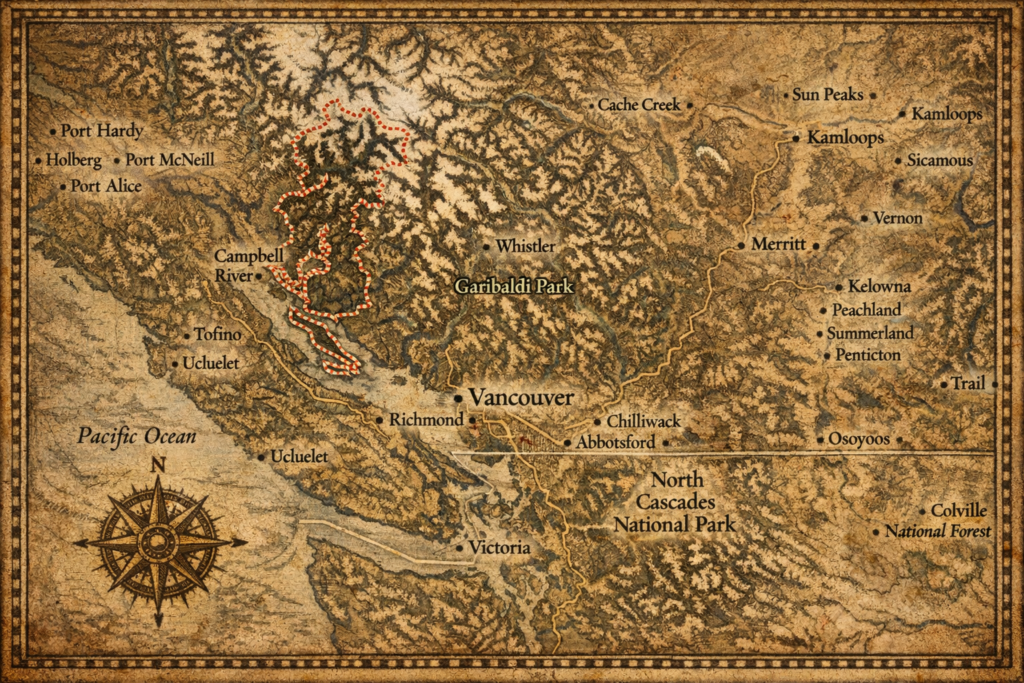
One of the biggest factors shaping life here is access. Even though it’s on the mainland, you can’t just drive to qathet from Vancouver. You’re taking ferries or flying in. That adds time, cost, and a bit of planning to almost everything.
That might sound like a downside, and sometimes it is. But it also changes the feel of the place:
- Things are a bit more deliberate
- People tend to be here on purpose
- You notice supply chains and dependencies more than you would in a big city
In a practical sense, geography acts as a filter. It reduces pass-through traffic and reinforces a sense of intentional community—people who are here generally chose it. At the same time, the natural environment is right there: ocean, lakes, forests, mountains—and many of the people living here make full use of it.
Living Here: Trade-Offs And Realities
Living in qathet involves a lot of trade-offs. You’ll probably deal with fewer services and less specialization, travel being more involved, and some things costing more or taking longer to get.
But in exchange, you get more space (physically and mentally), a stronger sense of local community, and easier access to the outdoors as part of everyday life. There’s also a different pace—less urgency, but also fewer layers of convenience. For some people, that balance works really well. For others, it doesn’t.
The Remote Work Shift
With remote work becoming more common, the region has become a lot more interesting in recent years.
I’ve met quite a few people here—many of whom have recently moved—working in software development, consulting and advisory roles, online businesses and services, and other remote jobs. This shift is subtle but important: instead of exporting people to cities for work, qathet is increasingly importing income. That changes local spending, housing dynamics, and long-term growth patterns.
Why Qathet Stands Out
qathet isn’t unique in being beautiful or fast-growing.
It’s interesting because of how different factors come together:
- A shift toward recognizing Indigenous identity and governance
- A history tied to one major industry, now transitioning
- Physical isolation paired with strong digital connectivity
- A population that’s a mix of long-time residents and people choosing a different kind of lifestyle
qathet isn’t trying to compete with big cities. It offers a different setup as a place that feels grounded and in transition at the same time.
Final Thought: Worth A Look
If your work or interests allow for some flexibility in where you’re based, you might want to come check it out someday…
And if you’re a Canadian looking for a “staycation,” there’s a lot to do here—especially if you love the outdoors.
It’s not for everyone—but for the right person, it could be a great fit!