
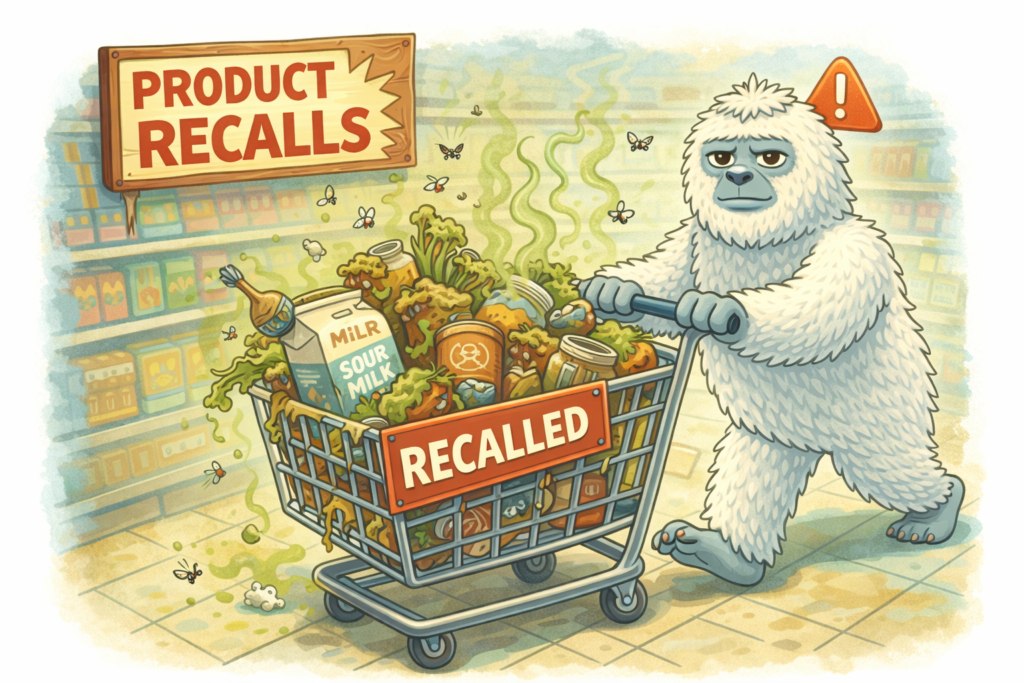
As a consumer, we have rights… including the right to safety, and to information that can support that safety.
Thus governments, manufacturers, and independent organizations publish safety information every day, as is their responsibility, but that information is spread across many systems and easy to miss. This page consolidates the most reliable places to check, with a focus on Canada and practical extensions into other jurisdictions when useful.
See something we missed? Get in touch!
Canadian Government Sources (Primary and Authoritative)
These are some of the most important sources for Canadians. The following government agencies issue mandatory recalls, safety alerts, and official advisories.
Health Canada — National Recalls and Safety Alerts: The central federal database for consumer products, food, vehicles, medical devices, cosmetics, and health products. Each notice typically includes affected models or lot numbers, the nature of the hazard, and clear next steps. https://recalls-rappels.canada.ca/en
Health Canada — Advisories and Warning: Timely public health warnings and advisories that may not always be formal recalls, but still indicate elevated risk. https://www.canada.ca/en/health-canada/news/media-room/advisories-warnings.html
Drugs and Health Products — Safety Notices: Covers prescription and non-prescription drugs, medical devices, natural health products, and biologics. Includes access to MedEffect e-Notice for email alerts. https://www.canada.ca/en/health-canada/services/drugs-health-products/advisories-warnings-recalls.html
Canadian Food Inspection Agency (CFIA) — Food Recalls and Allergy Alerts: Food recalls and allergy warnings related to contamination, undeclared allergens, or processing failures. Particularly relevant for households with dietary restrictions. https://recalls-rappels.canada.ca/en
Transport Canada — Vehicle and Equipment Recalls: Vehicle, tire, and child car seat recalls are published through the national recalls database. These are often under-acted on despite clear safety implications. https://wwwapps.tc.gc.ca/Saf-Sec-Sur/7/VRDB-BDRV/search-recherche/menu.aspx?lang=eng
Manufacturer and Retailer Notifications (Often Overlooked)
Not all safety issues become high-profile recalls. Many are handled quietly through brands and retailers.
Manufacturer Recall Pages: Large manufacturers maintain recall and safety notice pages that may include voluntary recalls not widely publicized.
Product Registration: Registering appliances, electronics, tools, and children’s products increases the chance of direct notification. This is one of the few cases where registration meaningfully reduces risk.
Retailer and Marketplace Alerts: Major retailers and online marketplaces often notify customers directly when a purchased item is recalled, and may offer refunds or replacements even years later.
International Recall Databases (Useful Cross-Checks)
Many products sold in Canada are identical to those sold elsewhere. International recalls can act as early warning signals.
United States — Consumer Product Safety Commission (CPSC): Comprehensive consumer product recalls and safety warnings. Often the first jurisdiction to publish recalls for globally distributed products. https://www.cpsc.gov/en/Recalls
United Kingdom — Product Safety Database (OPSS): Public database of unsafe products and recalls in the UK, useful for cross-checking electronics, toys, and household goods. https://www.gov.uk/guidance/product-safety-database-unsafe-products
SGS Global Product Recall Platform: Aggregates recall notices from Canada, the U.S., EU, UK, and other regions. Useful for deeper research or business-grade monitoring. https://www.sgs.com/en-us/publications/product-recalls
Practical Tips
Checking recall databases once is not enough. The value comes from habit and automation.
Subscribe to email alerts or apps rather than relying on memory or news coverage.
Cross-reference when unsure: If a product appears in a U.S. or UK recall but not yet in Canada, treat it as a signal to investigate further.
Why This Matters
Recalls are not about fear or paranoia. They are about recognizing that risk is usually mundane, distributed, and quiet. Applied awareness means knowing where credible information lives, checking it occasionally, and acting before small issues compound into real harm. You do not need to monitor everything. But it does help to know where to look.
Also, please note that there are tools out there that can help reduce effort and improve coverage; I have not covered them in this article.